
Governance as a lever for socio-economic development
Governance as a Lever for Socio-Economic Development
Governance as a lever for socio-economic development
Portfolio tracking platform
The digital platform for the "Governance as a Lever for Socio-Economic Development" portfolio is designed as an integrated tool for data collection, visualization, and analysis, supporting the strategic and operational management of interventions. It centralizes disaggregated indicators (gender, age, region) related to the portfolio's four impacts, enabling dynamic, real-time monitoring of progress on results at the national and regional levels. Structured around open-source modules, the platform ensures complete data traceability, self-service access for partners, and the generation of standardized reports for accountability and communication purposes. Designed collaboratively, it aims to strengthen the use of data for institutional learning, evidence-based decision-making, and alignment with partner priorities.
Cross-Cutting Themes

Transparency and Integrity
The portfolio works to strengthen transparency and prevent corruption by aligning public policies with international standards, particularly the United Nations Convention against Corruption (UNCAC). It integrates accountability measures in key sectors and engages civil society and the private sector to promote integrity. By fostering open and responsible governance, the portfolio ensures equitable public services, boosts economic competitiveness, and places human rights at the center of reforms.

Local and Economic Development
This axis aims to ensure that vulnerable populations have equitable access to essential services and economic opportunities. It relies on a territorial and multisectoral approach that promotes inclusive governance, strengthens productive infrastructure, and supports the creation of decent jobs. By mobilizing local stakeholders (authorities, CSOs, private sector), it encourages sustainable investments, green and digital transitions, and the empowerment of women and youth, contributing to more resilient and inclusive growth.

Security, Justice, and Human Rights
Ensuring equitable access to security and justice services while upholding human rights lies at the core of the portfolio. By integrating initiatives to prevent gender-based violence and promoting the economic empowerment of survivors, it contributes to building a more just and inclusive society. Through regular assessments and awareness campaigns, it supports continuous improvement of services while reinforcing institutional transparency and accountability.

Foresight and Impact
Producing and analyzing data for adaptive management and quality programming is central to this axis. By using perception surveys and regular evaluations, it helps measure the impact of interventions and adjust strategies based on the real needs of populations. This process promotes continuous learning and improved results while ensuring transparency and stakeholder engagement.
Faits & Chiffres
4
Community impact projects created to promote social cohesion.
They aim to create spaces for leisure, personal development, social interaction, exchange, creativity, and support for entrepreneurship, in order to reduce violence and strengthen social cohesion. These spaces improve families' quality of life by offering them secure access. For example, a kindergarten in Gsar Ouled Dabbab provides an educational and playful environment for young children, and a community center in Médenine offers a space conducive to entrepreneurship and recreational activities.
80
Youth integrated into the MENA-wide 'Integrity Guardians' network.
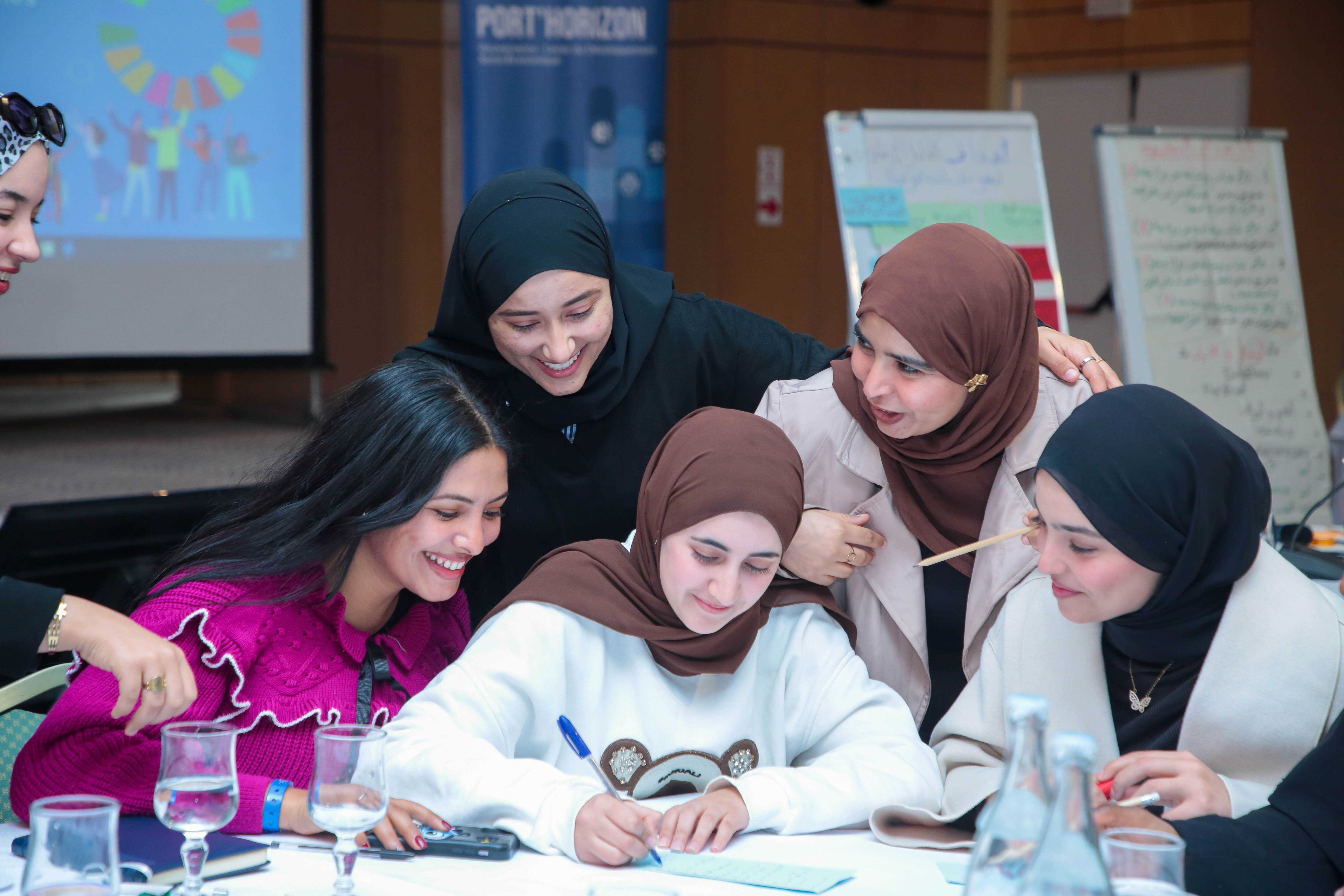
Among these youth, 64% are girls. This strategy has highlighted the approach of integrity and transparency, with active involvement of young people to promote these principles in their communities. Through awareness-raising activities and capacity-building, these young people have helped strengthen civic participation in the fight against corruption, while providing feedback from the field to adapt interventions.
19
Local security committees supported in various regions of Tunisia.
They bring security forces closer to the population by improving the quality of services provided and working together to understand and prevent local problems.
688
Internal Security Force agents trained on gender issues.
Among these agents, 31.83% are women. The other training topics are human rights and the care of women and children who are victims of violence.
